Banya Lexicon

The Words Behind the Rite

A short glossary for anyone new to banya tradition — the terms you’ll hear used in The Banya Rite, what they actually mean, and why each one earns its place in the ceremony.

The Space

Banya (BAHN-yah)

The bathhouse itself, and the tradition that comes with it. More than a sauna — a banya is built specifically for the wet heat produced by pouring water over hot stones, and for centuries it’s been the place a Slavic household turned to for healing, cleansing, and marking the major thresholds of a life: births, weddings, deaths, the turning of seasons.

Parilka (pah-RIL-kah)

The steam room proper — the hottest room in the banya, where the stones live and where the real heat of the rite happens. This is where Round Two, The Threshold, is held.

Predbannik (pred-BAN-nik)

The antechamber before the steam room — literally, “before the banya.” A cooler space for undressing, resting between rounds, and the quiet after the final round. Round Three’s wrapping, tea, and rest usually happen here.

Kamenka (kah-MYEN-kah)

The stone stove at the heart of the parilka. The stones are what turn water into the steam that makes everything else possible — heated for hours before a rite begins so they hold enough warmth to last through all three rounds.

The Tools

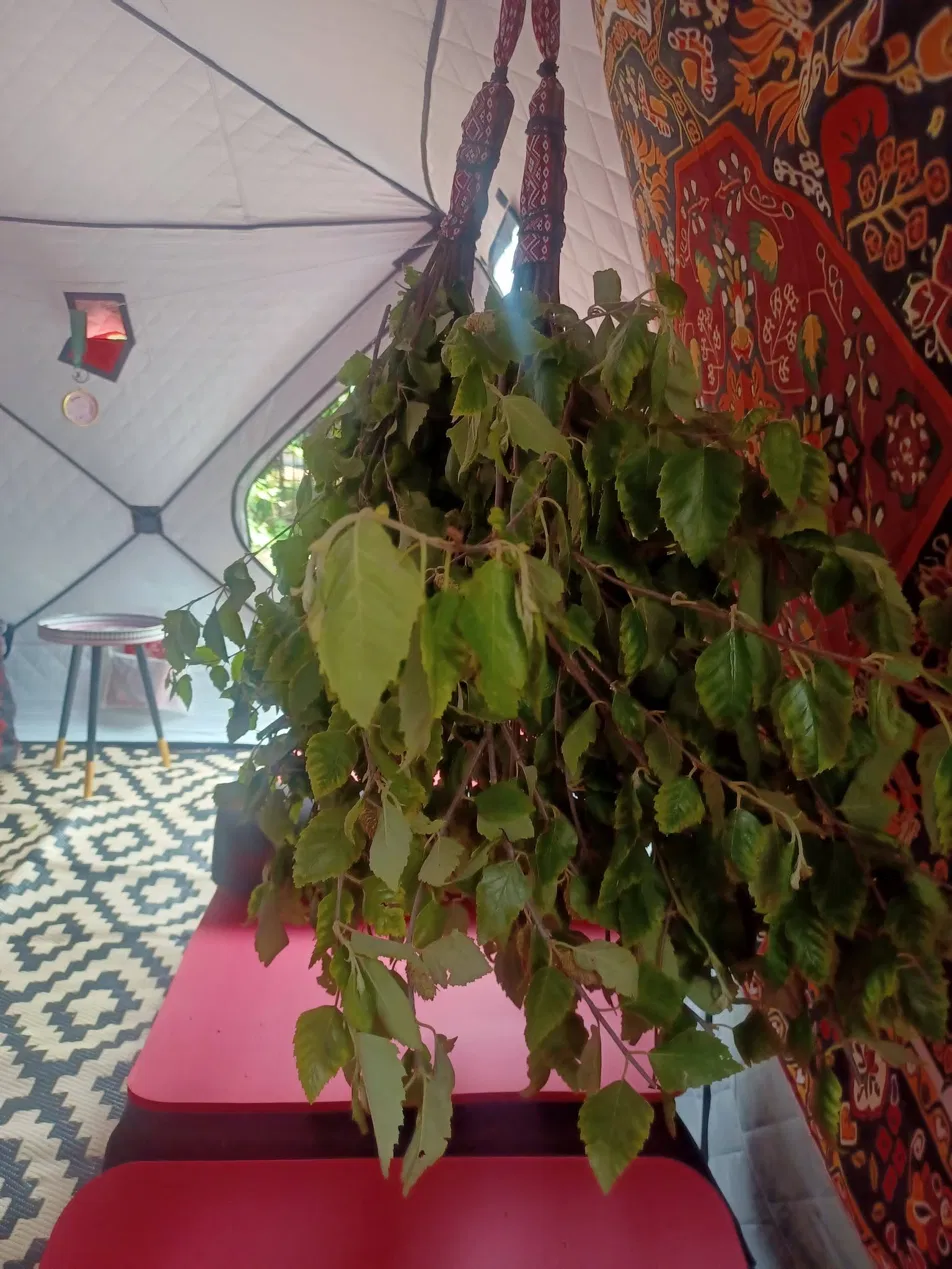
(VYEH-nik) A bundle of leafy branches — birch, oak, eucalyptus, or juniper, depending on the effect wanted — bound together and used to fan steam toward the body or strike it in a rhythmic, massaging motion. It’s the single most recognizable tool of the banya, and the one that carries the most weight in this rite: contact, blessing, and release all happen through the venik.
  • Berezovy venik (birch) — the most traditional choice; gentle, softening, associated with cleansing and new growth.
  • Dubovy venik (oak) — sturdier leaves, a firmer strike; associated with strength and grounding.
  • Eucalyptus venik — sharper scent, opens the breath; often used when clearing rather than blessing is the intention.
  • Krapiva venik (nettle) — used sparingly and with care; a sharper, more bracing strike tied to circulation and shaking something loose.

Parenie (pah-REH-nyeh)

The art of using the venik itself — not just striking, but a whole practiced sequence of fanning steam, brushing, and rhythmic tapping across the body. A skilled parenie can move someone from relaxed to activated to fully released within a single round; it’s closer to a choreographed massage than a simple beating.

Zaparka / Zaparivat (zah-PAR-kah)

The steaming of the venik in hot water before it’s used — softening the leaves so they release their scent and won’t scratch the skin. Always done before Round One begins.

Kovsh (kohvsh)

The small wooden or metal ladle used to pour water (sometimes infused with herbs, kvass, or essential oils) over the hot stones, producing the steam that fills the parilka.

Bannaya shapka (BAHN-nah-yah SHAHP-kah)

The felt hat worn in the hottest rounds to protect the head and hair from the heat, allowing longer time in the parilka without overheating the head — practical, but also a small visual marker of who’s mid-rite.
The Practice

Zhar (zhahr)

The heat itself, specifically the thick, moist heat of a well-run banya — distinct from the dry heat of a Finnish sauna. Zhar is felt as much as measured; a banschik reads it by how the body responds, not by a thermometer.

Banschik / Banshchik (BAHN-shchik)

Traditionally, the person who tends the banya and the ritual within it — building the heat, managing the rounds, wielding the venik on behalf of others. The role this rite’s facilitator steps into.

Okatyvanie (oh-kah-TIH-vah-nyeh)

The pouring or plunging of cold water over the body at the close of a round — the practice behind Round Three, The Cooling Waters. It’s what seals the heat’s work into the body rather than letting it simply fade.

S lyogkim parom! (s LYOHKH-kim PAH-rom)

A traditional well-wish offered after someone finishes their banya — roughly, “with a light steam!” It’s said as a blessing on the way out, an acknowledgment that something real just happened in that room.

The Spirit of It

Mokosh (MOH-kosh)

The Slavic goddess of women's fate, water, earth, and the thread of a life — often invoked in elder and blessing rites, including A Banya for the Elder. Mokosh presides less over the fire than over what the fire is for: the shape a woman's life takes across its whole length.

Bannik (BAHN-nik)

In folk tradition, the spirit believed to live in the banya itself — neither fully welcoming nor hostile, but owed respect. Old custom left the last round of water, or a bit of bread, for the bannik before leaving. A reminder that the space itself was never treated as neutral.

New to these words doesn't mean new to the rite — the language is here to deepen what the heat already does, not to gatekeep it. If a term comes up during your session that isn't listed here, ask; it's part of the ceremony to learn it.

Facilitated as a threshold rite — for one woman, or for a circle.
Scroll to Top